
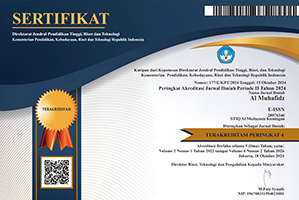


Al-Muhafidz: Jurnal Ilmu Al-Qur'an dan Tafsir protects the independence of its editorial assessment and publication decisions. Editors evaluate manuscripts on scholarly grounds, free from improper influence by the journal owner, publisher, sponsors, advertisers, or any other interested party.
1. Basis of Editorial Decisions
Editorial decisions rest on the manuscript’s relevance to the journal’s aims and scope, its originality, its scholarly contribution, the soundness of its methodology or theoretical framework, its research integrity, and the evidence produced through editorial assessment and peer review.
Decisions must not be shaped by an author’s nationality, ethnicity, gender, religion, institutional prestige, political views, or personal relationship with the journal’s personnel. Evaluating the strength of a manuscript’s arguments and evidence remains part of the scholarly assessment.
2. Protection from Organizational Interference
Ownership, publishing support, and operational management do not give anyone the authority to require the acceptance or rejection of a particular manuscript. Such decisions belong to the editor authorized under the journal’s editorial arrangements.
The journal owner and publisher, LPPM STIQ Al Multazam Kuningan, may raise documented concerns about research integrity, legal obligations, or operational matters through the journal’s formal procedures. These concerns must not be used to dictate a preferred scholarly outcome.
Editors must not be pressured, threatened with removal, or penalized for a good-faith editorial decision made in accordance with the journal’s policies. Any review of an editor’s performance must distinguish legitimate accountability from disagreement with an individual publication decision.
3. Financial and Commercial Separation
An author’s ability or willingness to pay an Article Processing Charge, eligibility for a fee waiver, or financial relationship with the publisher must not influence manuscript assessment or the acceptance decision. Acceptance cannot be bought or promised.
Publication targets, revenue expectations, sponsorship, advertising, and commercial partnerships must not determine which manuscripts are accepted, rejected, corrected, or retracted.
Financial administration is handled separately from scholarly assessment. Applicable fees, payment arrangements, and waivers are described in the Author Fees policy.
4. Personal and Institutional Influence
Submissions from editors, board members, publisher personnel, collaborators, or affiliated institutions must not receive preferential treatment. Where a relevant conflict of interest exists, the manuscript must be handled independently in accordance with the journal’s applicable policies.
Individuals who hold both organizational and editorial positions remain subject to the same safeguards. Their organizational position must not be used to bypass independent assessment or to influence the editor responsible for a manuscript.
5. Response to Attempted Interference
An editor who experiences attempted interference should document the communication and refer the concern to a non-conflicted editorial authority. If the Editor-in-Chief is involved, the concern must be referred to another suitably qualified editor who has no conflict of interest.
Where no suitable internal editor is available, an independent external editor should be engaged. A person whose conduct is under review must not control the assessment or its outcome.
Any resulting reassignment or editorial action must be recorded. Detailed complaint, appeal, and misconduct procedures remain governed by the journal’s relevant policies, including Publication Ethics.


Al Muhafidz: Jurnal Ilmu Al-Qur'an dan Tafsir published by the Institute for Research and Community Service (LP2M) Al Multazam College of Qur'anic Sciences Kuningan, West Java.
This work is licensed under CC BY 4.0